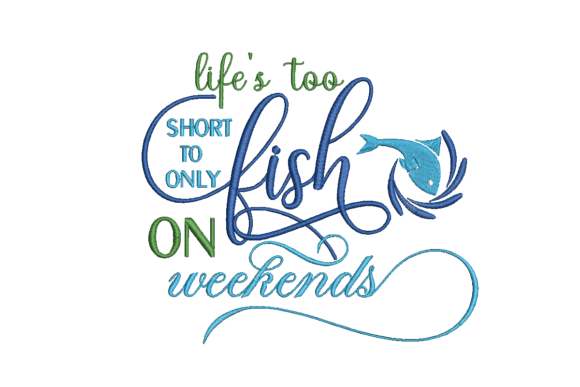
Life Too Short to Fish Weekends Design Review
As an embroidery designer who has spent years turning digital concepts into tangible, stitched realities for small businesses, I approach every new design file with a critical eye. We aren’t just looking for something that looks pretty on a screen; we are looking for commercial viability, production efficiency, and brand alignment. Today, I am reviewing the Life s Too Short to Fish on Weekends machine embroidery design. This piece claims to be fun, easy to stitch, and elegant when finished. But does it hold up under the scrutiny of small business merchandising?
First Impressions: Personality and Visual Appeal
The title itself carries a distinct voice. It suggests a lifestyle brand—one that values work-life balance, outdoor leisure, and perhaps a touch of rustic charm. When I first loaded the embroidery file into my digitizing software, the immediate takeaway was its playful yet professional tone. For a small café, a boutique handmade shop, or a creative studio, this design bridges the gap between casual comfort and polished presentation.
The description notes that it will look "elegant and gorgeous" on any fabric. In my experience, elegance in embroidery often comes from clean lines and balanced negative space rather than excessive detail. If this design adheres to that principle, it is well-positioned for high-end custom apparel. The visual personality feels modern enough for a contemporary craft business but classic enough to appeal to a broader audience interested in camping or fishing hobbies. It avoids being overly decorative or cluttered, which is a common pitfall in amateur designs. Instead, it projects a friendly, approachable brand identity that can foster customer trust and engagement.
Real-World Business Applications
For small business owners, Etsy sellers, and product designers, versatility is key. A single design must perform across multiple touchpoints to maximize return on investment. Here is how Life s Too Short to Fish on Weekends translates into real-world use cases:
- Embroidered Patches: This design is an ideal candidate for iron-on or sew-on patches. Small brands often use patches as standalone products or as branding elements on larger items. The text-heavy nature of the design works well here, provided the lettering remains legible.
- Staff Uniforms and Aprons: Imagine a local bakery or a specialty coffee shop where staff wear branded aprons. Adding this design to the chest pocket or back yoke adds a personal touch that resonates with customers who appreciate artisanal vibes. It humanizes the brand without being unprofessional.
- Caps and Hats: Cap embroidery is a staple of small business merch. This design could serve as a front-center logo or a smaller accent on the side panel. The phrase is catchy and memorable, making it perfect for promotional hats given away at events or sold as part of a bundle.
- Tote Bags and Tote Bag Design Elements: Canvas tote bags are ubiquitous in the handmade market. Stitching this design onto a natural cotton tote creates a cohesive handmade product set. It appeals directly to the target demographic—people who enjoy the outdoors and support local artisans.
- Product Packaging Accents: Don’t overlook the power of packaging. A small embroidered label inside a garment or attached to a box elevates the perceived value of the item. It signals quality and attention to detail, reinforcing brand identity.
- Boutique Merchandise and Customer Gifts: For florists, pet brands, or creative studios, this design offers a unique angle. It can be used on mugs, notebooks, or even pet bandanas, expanding the range of available design assets for seasonal promotions.
Strategic Placement and Brand Identity
When integrating Life s Too Short to Fish on Weekends into your product line, consider how it affects your overall aesthetic. Consistency is crucial for recognition. If your brand leans towards rugged, outdoor aesthetics, this design fits seamlessly. If your brand is minimalist, you may need to adjust the placement or scale to ensure it doesn’t overwhelm the garment.
The design’s ability to enhance customer trust lies in its execution. A well-stitched patch or logo implies that the business cares about quality. Conversely, a sloppy stitch job can damage reputation. Therefore, the choice of this design should be paired with high-quality materials and precise production standards. It serves as a visual promise of the care put into every finished product.
Practical Embroidery Designer Notes for Production
Before committing to bulk production, there are several technical considerations every designer and business owner must address. Based on general best practices for text-based and graphic designs, here is what you need to verify:
- Test in Black and White: Always digitize or view the design in monochrome first. This helps identify spacing issues and ensures that the contrast between thread colors and fabric is sufficient. Poor contrast can make text illegible, especially on dark uniforms.
- Check Legibility at Small Sizes: If you plan to use this for tiny labels or small patch sizes, test the minimum viable size. Text designs often lose clarity when scaled down too far. Ensure that the lettering remains readable without requiring excessive zooming.
- Review Thread Color Contrast: Select thread colors that pop against your intended fabric. For example, light threads on dark denim require a different approach than dark threads on white canvas. Proper thread colors selection is vital for the "elegant" look promised in the description.
- Inspect Spacing and Density: High stitch density can cause puckering, especially on lightweight fabrics. Inspect the spacing between letters and graphic elements. If the design is too dense, it may feel stiff and uncomfortable to wear. Look for adequate underlay stitches to stabilize the fabric.
- Confirm Hoop Size and Stabilizer: Verify the required hoop size for the largest iteration of the design. Using the wrong stabilizer for your fabric type (e.g., tear-away vs. cut-away) can ruin the final result. For stretchy fabrics like t-shirts, a cut-away stabilizer is usually necessary to maintain integrity after washing.
- Create a Printable Mockup: Before cutting fabric, create a printable mockup to visualize the design on actual products. This allows for client approval and helps spot potential layout errors early in the process.
- Commercial Licensing: Most importantly, confirm the commercial licensing terms of the digital embroidery file. Ensure you have the right to sell products featuring this design. Avoid legal pitfalls by keeping records of your purchase and license agreements.
Fabric Texture and Washing Considerations
Be cautious when applying this design to textured fabrics like heavy tweeds or loose-weave linens, as the needle penetration may be inconsistent. Additionally, for items that require frequent washing, such as staff aprons or work shirts, reinforce the edges of the embroidery with proper backing to prevent fraying over time. Dark uniforms may show lint or thread fuzz more easily, so regular maintenance of the embroidery machine and cleaning of the hoop area are essential.
Final Verdict for Small Business Owners
The Life s Too Short to Fish on Weekends design offers a compelling option for businesses looking to add personality to their merchandise. Its blend of humor and elegance makes it suitable for a wide range of applications, from embroidered patches to tote bag design accents. However, success depends on careful production planning. By testing the design thoroughly, selecting appropriate materials, and ensuring proper licensing, you can leverage this asset to strengthen your brand identity and connect with customers on a deeper level.
For those in the Camping niche or general lifestyle markets, this design provides a versatile tool for creating cohesive, professional-looking commercial embroidery products. Remember, the goal is not just to stitch a design, but to create a lasting impression that drives sales and builds loyalty. With the right preparation, this design can be a valuable addition to your portfolio of design assets.