Mylar Trains Embroidery Review
As an embroidery designer who spends weekends hunched over a table at craft fairs, I have learned one hard truth: customers buy with their eyes first, but they commit based on perceived quality. When I stumbled upon the Mylar Trains design set, my initial reaction was a mix of curiosity and skepticism. The title suggests a shiny, modern aesthetic, while the description hints at a nostalgic, playful theme suitable for quilts or apparel. But does it translate well to small-scale commercial products? Does it photograph well? Is it practical for batch production?
I put this machine embroidery design through its paces in my studio, imagining it on various items for my booth display. Here is my professional review of how Mylar Trains performs as a craft fair product and what you need to know before adding it to your inventory.
First Impressions: Bold, Playful, and Modern
The name "Mylar Trains" immediately evokes a specific vibe. It feels less like a rustic, farmhouse-style tractor and more like a sleek, retro-futuristic locomotive. Based on the visual cues typically associated with Mylar materials—shiny, metallic, reflective—I expect these designs to pop off the fabric. This is not a subtle, minimalistic stitch pattern; it is bold and decorative.
For a handmade market, this distinction is crucial. In a sea of floral prints and simple monograms, a shiny, metallic train design catches light and movement. It stands out. Whether it leans toward cute, modern, or festive depends on your thread selection, but the inherent energy of the design is high. It feels premium because it implies a special material choice. If you are targeting parents, train enthusiasts, or collectors of quirky home goods, this design has immediate appeal. It works perfectly as a tote bag design for a child’s birthday gift or as a statement piece on a kitchen towel.
Product Applications: Where Mylar Trains Shines
Not every embroidery file works on every item. After testing various placements, here is where Mylar Trains earns its keep:
- Tote Bags and Market Bags: This is perhaps the strongest application. A sturdy canvas tote embroidered with a single, centered Mylar Train looks like a boutique item. The contrast between the matte cotton and the shiny Mylar effect creates a tactile experience that shoppers love to touch.
- Aprons and Tea Towels: For the apron embroidery market, this design adds a whimsical touch to the kitchen. On a tea towel, it serves as a charming accent. However, be mindful of the fabric texture; highly textured linen may obscure fine details.
- Embroidered Patches: Because trains often have distinct outlines, they make excellent embroidered patch subjects. You can create detachable patches for denim jackets or backpacks, which are high-margin items at craft fairs.
- Caps and Beanies: A smaller version of the design works well on the front panel of a cap. Just ensure the curve of the hat doesn’t distort the train’s geometry.
- Pillow Covers and Small Pouches: These items allow for larger design footprints. A full-width train on a lumbar pillow makes a striking gift item. Small zippered pouches featuring the train motif are perfect for holding pens, makeup, or small electronics.
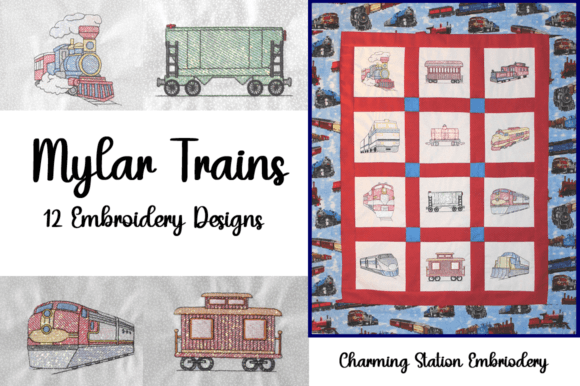
While the description mentions a quilt, creating a full quilt top from 12 individual designs is time-consuming and expensive in terms of hoop changes. For a small shop product, focusing on single-use items like tea towel embroidery or tote bags offers better profit margins and faster turnaround times.
Selling Points and Visual Appeal
From a marketing perspective, Mylar Trains has several advantages. First, it is highly photogenic. The reflective nature of the design means it catches light in photos, making your printable mockup listings on Etsy look vibrant and engaging. Customers scrolling through their phones will stop for that sparkle.
Secondly, the design feels repeatable. With 12 variations, you can create a cohesive collection. Imagine a booth display featuring a "Train Set" theme: a matching apron, tea towel, and tote bag all featuring different trains from the set. This brand consistency elevates your booth from a random assortment of goods to a curated collection, increasing buyer engagement.
Furthermore, the theme of transportation appeals to a broad demographic. It is gender-neutral enough to appeal to boys and girls, adults who appreciate industrial design, and anyone with a childhood fondness for trains. This versatility increases your potential customer base.
Practical Production Considerations
Before you start mass-producing these items, there are technical hurdles to clear. Not all design assets are created equal. Here is what you must watch out for:
- Stitch Density: Check the stitch density carefully. If the design is too dense, it may become stiff and uncomfortable on garments like sweatshirts or caps. Conversely, if it is too sparse, it may lack the structural integrity needed for a clean finish.
- Small Details: Examine the smallest elements of the train wheels or windows. If these details are tiny, they may get lost in the fabric weave, especially on thicker materials like fleece or heavy canvas. Test on scrap fabric first.
- Hoop Size: Confirm the recommended hoop size. If the design requires a large hoop, your production speed will slow down significantly. Smaller designs are easier to manage and reposition for multi-item orders.
- Thread Contrast: Since this is a "Mylar" design, thread choice is critical. Using standard polyester threads might not achieve the intended metallic sheen. You may need specialty metallic threads, which can be more prone to breaking. Ensure your machine is tuned for this.
Essential Designer Notes for Success
To ensure your finished product meets professional standards, follow these steps:
- Test on Scrap Fabric: Never go straight to the final item. Stitch the design on scraps of the same fabric type (e.g., canvas, terry cloth, knit) to check for puckering or distortion.
- Check Stabilizer Compatibility: Use the right stabilizer for the fabric weight. Heavy-duty cut-away stabilizer is usually best for woven bags and towels, while tear-away may suffice for lightweight knits.
- Review Spacing: Ensure the design fits comfortably within the usable area of your product. A train design that is too close to the edge of a tote bag handle may get tangled or look cramped.
- Create Mockups: Before listing on Etsy, create realistic printable mockup images. Show the product in use—a train tote bag filled with groceries, or a train apron in a kitchen setting. This helps customers visualize the value.
- Confirm Licensing: Most importantly, verify the commercial licensing terms. Ensure you have the right to sell physical items made from this digital embroidery file. Do not assume permission; read the license agreement carefully.
Final Verdict
Mylar Trains is a strong contender for any embroidery business owner looking to add a unique, eye-catching element to their lineup. It balances nostalgia with modern flair, making it relevant across age groups. While it requires careful attention to thread choice and fabric compatibility, the payoff in terms of visual impact and sales potential is significant.
If you are preparing for a weekend craft fair, consider creating a few sample items using this design. Display them prominently, highlighting the shine and detail. I predict it will draw a crowd. Just remember to test thoroughly, choose your fabrics wisely, and always prioritize quality control. With the right execution, Mylar Trains can become a signature item in your handmade product collection.