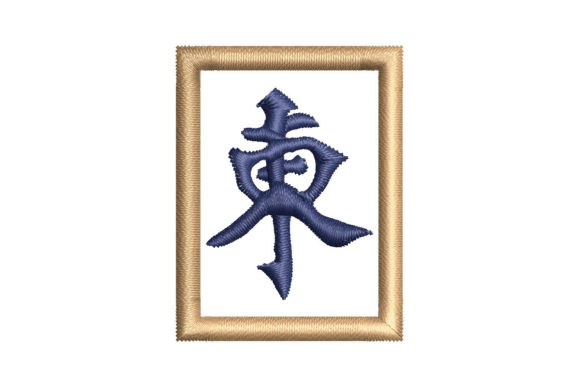
Mahjong Tile East Wind: A Designer’s Review for Merch
As an embroidery designer who has spent years turning digital files into tangible brand assets, I look at every new design with a specific lens. It is not just about whether the pattern looks good on a screen; it is about how it translates to thread, fabric, and ultimately, customer perception. Today, I am reviewing the Mahjong Tile East Wind file. This piece falls under the Games category but offers significant potential for broader commercial applications, particularly for brands looking to inject personality into their small business merch.
The product description notes that this is a machine embroidery design where the background is not filled, except for the border. The files are tested prior to release. For those of us creating embroidered patches, custom apparel, or branded accessories, these technical details are crucial. They dictate how the design will sit on a garment and how much stabilizer support you might need.
First Impressions: Visual Personality and Brand Fit
When I first loaded the Mahjong Tile East Wind file into my digitizing software, the immediate takeaway was its clean, structured aesthetic. Mahjong tiles are inherently geometric and bold. By leaving the background unfilled, the design allows the underlying fabric color to become part of the composition. This creates a lighter, more breathable feel compared to fully filled block designs.
The "East Wind" motif suggests direction, new beginnings, and luck—themes that resonate well with hospitality, wellness, and creative industries. Visually, the design feels professional yet playful. It avoids being overly ornate, which makes it versatile. It does not scream for attention like a complex floral bouquet, nor is it as stark as a simple text logo. Instead, it sits comfortably in the middle ground: decorative enough to be interesting, but structured enough to maintain a premium look. This balance is essential for brands that want to appear approachable without sacrificing quality.
Real-World Applications for Small Businesses
The true test of any digital embroidery file is its performance in production. Here is how I see Mahjong Tile East Wind performing across various commercial use cases:
- Embroidered Patches: Because the design has a defined border and lacks a heavy filled background, it is an excellent candidate for iron-on or sew-on patches. The open center reduces bulk, making the patch lie flatter against clothing. This is ideal for custom apparel like denim jackets, beanies, or backpacks where customers want to add a unique touch.
- Staff Uniforms and Aprons: For small cafés, bakeries, or boutique retail staff, this design offers a subtle branding opportunity. Placed on the chest pocket or the lower corner of an apron, it adds a "handmade product" feel that connects the wearer to the craft of the business. It works particularly well for businesses with a vintage, Asian-fusion, or game-themed identity.
- Caps and Hats: Cap embroidery requires designs that can withstand curvature. The linear nature of tile characters often translates well to the curved front panel of a baseball cap or trucker hat. The unfilled background prevents the stiffening effect that can make caps uncomfortable, ensuring the hat remains wearable.
- Tote Bag Design: Canvas tote bags are a staple for Etsy branding and event merch. The contrast between the thread and the natural canvas texture enhances the visual appeal of the tile design. It serves as a walking advertisement that feels personal rather than mass-produced.
- Product Packaging Accents: Beyond apparel, this design can be used on hang tags, gift boxes, or shipping labels. Adding a small embroidered element to packaging elevates the unboxing experience, directly impacting customer trust and perceived value.
Strategic Placement for Maximum Impact
To maximize the effectiveness of Mahjong Tile East Wind, consider strategic placement. For a florist or pet brand, a small version on a sleeve cuff can add a whimsical detail. For a creative studio, a larger version on the back of a work shirt can serve as a conversation starter. The key is consistency. If you use this design, ensure it aligns with your overall brand identity. Does it match the tone of your other marketing materials? Does it reflect the values of your handmade products?
Areas of Caution and Technical Considerations
While the design has strong potential, there are specific scenarios where caution is required. As a professional, I always advise clients to review the following before committing to large-scale production:
- Small Patch Sizes: If you plan to scale this down significantly (e.g., under 2 inches), the fine details of the tile character may become lost. Always create a printable mockup at the intended final size to check legibility.
- High Stitch Density: Although the background is unfilled, the borders and the character itself likely have moderate stitch density. Ensure your machine settings are optimized to prevent puckering, especially on lightweight fabrics.
- Fabric Texture and Color: The unfilled background means the fabric shows through. On dark uniforms, you may need a contrasting backing or a light-colored thread choice to ensure the design pops. Conversely, on textured fabrics like heavy tweed, the definition of the tile edges might be obscured. Test on your actual production fabric whenever possible.
- Hoop Size Constraints: Verify the recommended hoop size for this file. Some embroidery machines struggle with very large single-piece designs if the hoop capacity is limited. Additionally, frequent washing can cause distortion in less stable fabrics, so recommend proper care instructions to your end-users.
Affecting Brand Identity and Customer Trust
Every stitch contributes to your brand narrative. Using a high-quality, tested file like Mahjong Tile East Wind signals professionalism. It tells the customer that you care about the details. In the crowded market of merch creators and product designers, standing out is difficult. A unique, culturally resonant symbol like the East Wind tile can differentiate your offerings from generic clip-art logos.
Furthermore, the tactile nature of embroidery fosters a deeper connection than print. When a customer receives a tote bag or wears a cap featuring this design, they are engaging with a finished product that has physical weight and texture. This sensory experience enhances buyer engagement and encourages social media sharing, providing organic marketing for your small business.
Practical Designer Notes for Production
Before you run this file on your production line, follow these best practices to ensure success:
- Test in Black and White: Convert the design to monochrome to check the balance of positive and negative space. This helps identify if the design is too busy or too sparse.
- Review Thread Color Contrast: Select thread colors that offer sufficient contrast against your target fabric. The border should stand out clearly to frame the character effectively.
- Inspect Spacing: Zoom in on the digitized file to check the spacing between stitches. Gaps can lead to weak points in the design, while overlapping stitches can cause bulk.
- Confirm Hoop Size: Ensure your embroidery machine’s hoop can accommodate the design dimensions without requiring re-hooping, which can misalign the stitching.
- Use Proper Stabilizer: Depending on the fabric, use cut-away or tear-away stabilizers to prevent shifting and distortion during the embroidery process.
- Create a Mockup for Client Approval: If you are offering this as a service, provide digital mockups to clients so they can visualize the final result on their specific items.
- Compare Beside Other Assets: Place this design next to your existing logo or other design assets to ensure visual harmony.
- Confirm Commercial Licensing: Finally, and most importantly, verify the licensing terms. Ensure you have the right to use this design asset for commercial merchandise sales. Do not assume standard purchase includes full commercial rights unless explicitly stated.
In conclusion, Mahjong Tile East Wind is a versatile, well-structured addition to any embroiderer’s library. Its clean lines and cultural symbolism make it suitable for a wide range of commercial embroidery projects. By paying attention to technical details and strategic placement, small business owners can leverage this design to enhance their brand identity and create memorable, high-quality products.