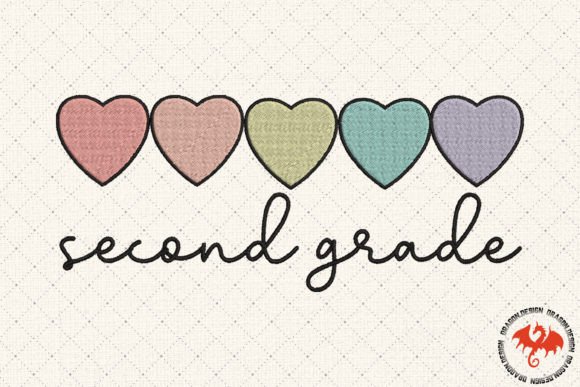
Heart Second Grade Review for Merch
As an embroidery designer who has spent years translating digital concepts into tangible, stitched assets for small businesses, I approach every new file with a critical eye. We aren’t just looking at aesthetics; we are looking at viability, scalability, and brand alignment. When Heart Second Grade landed in my review queue, described as a perfect addition to back-to-school projects and home decor, I immediately thought about its potential in the commercial sector. This is not merely a decorative element; it is a potential cornerstone for branded merchandise, staff uniforms, and customer engagement tools.
The title suggests a playful yet structured vibe, hinting at a design that balances professionalism with approachability. For small business owners, Etsy sellers, and apparel decorators, finding a design that bridges the gap between "cute" and "corporate" is often the hardest part of product development. In this review, I will break down how Heart Second Grade performs when moved from a hobbyist’s hoop to a production-ready embroidered patch or custom apparel piece.
First Impressions: Visual Personality and Brand Fit
When you first load a machine embroidery design, the immediate assessment is about its visual weight and clarity. Heart Second Grade strikes a balance that is rare in the current market. It feels friendly without being childish, and bold enough to hold attention without overwhelming the garment. The description mentions it looks nice on clothes and gifts, which implies a versatility that is crucial for modern brands.
For a boutique, a handmade shop, or a creative studio, this design offers a "handmade presentation" that customers crave. It does not look like a mass-produced sticker; it looks like a crafted detail. Whether you are running a local café, a florist, or a pet brand, the aesthetic of Heart Second Grade can enhance your brand identity by adding a touch of warmth and personality. It signals that you care about the details, which directly impacts customer trust and recognition.
Real-World Business Applications
The true test of any embroidery file is its performance across different mediums. Here is how I envision Heart Second Grade functioning in real-world commercial scenarios:
- Embroidered Patches: One of the most profitable applications for this design is as a detachable or sew-on patch. For craft businesses and digital embroidery file buyers, creating a line of patches allows for low-risk inventory and high-margin sales. The design’s structure likely lends itself well to clean edges, making it ideal for application on denim jackets, backpacks, or tote bags.
- Staff Uniforms and Aprons: For small cafés, bakeries, or boutiques, uniformity is key. Placing Heart Second Grade on the chest of a work shirt or the bib of an apron creates a cohesive team look. It elevates the custom apparel from generic to branded, helping staff feel like ambassadors of the brand.
- Cap Embroidery: Caps remain a staple in small business merch. If the design is compact enough, it works beautifully on the front panel of a cap. However, curvature requires careful digitizing, which brings us to our technical considerations.
- Tote Bag Design: Canvas totes are evergreen products. A single, well-placed stitch of this design adds significant value to a plain tote, turning it into a premium handmade product that customers are willing to pay more for.
- Product Packaging Accents: Beyond apparel, consider stitching this onto hang tags, gift boxes, or even fabric labels inside garments. These subtle touches reinforce visual consistency and enhance the unboxing experience.
Strategic Considerations and Limitations
No design is perfect for every application. As a professional, I must highlight where Heart Second Grade requires careful execution to avoid disappointing end-users.
First, consider scale. If you plan to use this as a tiny accent on a sleeve or a small logo on a hat, you must ensure the design retains legibility at that size. Small patch sizes often suffer from lost detail if the digitization is too intricate. Always produce a printable mockup at 100% scale before committing to production to verify that the spacing and outlines remain clear.
Second, evaluate the stitch density. High stitch density can make a fabric stiff, which is undesirable for soft apparel but excellent for rigid patches. If the design uses heavy satin stitches, test it on your actual target fabric. On textured fabrics, such as coarse canvas or fleece, the definition may blur, affecting the final quality of the finished product.
Additionally, be mindful of thread color contrast. On dark uniforms or deep-colored totes, light threads may require a dense underlay or multiple passes, increasing production time and cost. Conversely, on light fabrics, ensure the design doesn’t get lost. Testing in black and white first helps assess the shape’s integrity independent of color, ensuring the core design assets are strong.
Impact on Brand Identity and Customer Engagement
Why does this specific design matter for your bottom line? Because embroidery is tactile. Unlike printed graphics, stitched designs convey durability and quality. When a customer sees Heart Second Grade on a product, they perceive higher value. It suggests that the brand invests in lasting materials rather than disposable goods.
This perception drives buyer engagement. A unique, well-executed embroidered mark becomes a conversation starter. It differentiates your small business merch from competitors who rely solely on screen printing or vinyl decals. By integrating this design into your commercial embroidery strategy, you are not just selling a product; you are selling an experience of craftsmanship and attention to detail.
Practical Designer Notes for Production
Before you add Heart Second Grade to your catalog, follow these essential steps to ensure success:
- Check Hoop Size and File Format: Verify the maximum dimensions of the design. Ensure it fits within your standard production hoops to minimize re-hooping and labor costs.
- Stabilizer Selection: Choose the correct stabilizer for your fabric. Heavy-duty cut-away stabilizers are usually best for woven items like caps and totes, while tear-away may suffice for temporary backing on softer knits.
- Thread Color Contrast: Select thread colors that pop against your base material. Don’t assume default colors will work; test combinations to maximize visual impact.
- Commercial Licensing: This is non-negotiable. Confirm that you have the proper license to sell physical goods made with this digital embroidery file. Unauthorized use can lead to severe legal issues.
- Client Approval Mockups: If you are offering custom services, always provide a realistic mockup for client approval. This manages expectations and reduces returns due to dissatisfaction with the final look.
In conclusion, Heart Second Grade is a versatile and commercially viable option for designers looking to expand their offerings. Its blend of friendly aesthetics and structural clarity makes it suitable for a wide range of applications, from apron embroidery to branded accessories. By approaching it with technical diligence and strategic vision, you can transform this simple design into a powerful tool for building your brand’s reputation and revenue.